
Reflections on Five Centuries of Encounter with the Wider World
This article by Thomas Schirrmacher was originally published at Christian Daily International. Photo gallery: https://thomasschirrmacher.net/?p=25932
(Bonn, 10.09.2026) 500 years ago in August 1526, the Spanish navigator Alonso de Salazar made the first recorded European sighting of an island in what is now the Republic of the Marshall Islands, probably Bokak Atoll. This was not the “discovery” of an empty land. Archaeological evidence shows human settlement on several of the Marshall Islands going back around 2,000 years, to approximately the first century AD; some scholars have proposed even earlier dates for individual finds, though these remain debated. By the time Europeans arrived, generations of Marshallese had long since developed their own culture and society in this extraordinary Pacific environment.
Today, unlike the indigenous peoples of many former colonies, the Marshallese remain the overwhelming majority of the population and the principal bearers of the country’s political, cultural and religious life. Marshallese traditions continue to shape society, including its matrilineal structures and the traditional authority of the Iroij, whose role is formally recognised in the constitutional system through the Council of Iroij.
Having just had the privilege of visiting the Marshall Islands myself, I would like to reflect on this long history and, above all, on what the Marshallese people have built as an independent nation.
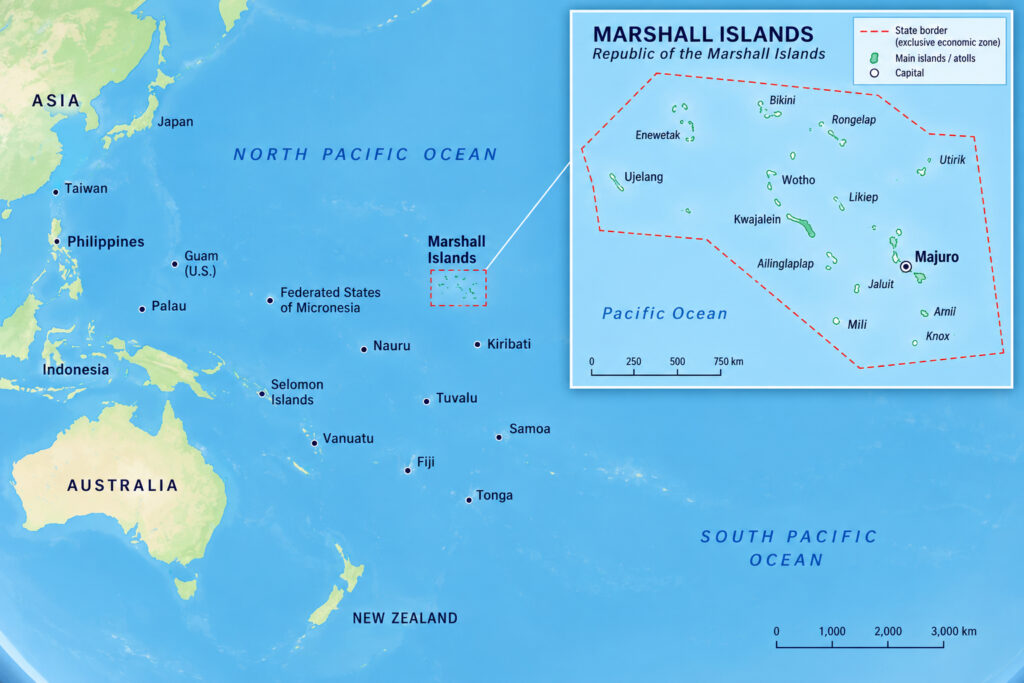
The Republic of the Marshall Islands is today a small but remarkably stable democracy. In 2026, it also marks 40 years of independence: on 21 October 1986, the Compact of Free Association entered into force and the Republic became a sovereign state. Freedom House rates the country “Free” with 93 out of 100 points, describing it as a stable democracy with regular competitive elections, an independent judiciary and a free press. Freedom of expression, assembly, association and religion are constitutionally protected, and citizens choose their representatives in free and fair elections.
For someone committed to human rights and particularly to freedom of religion or belief, this deserves recognition. The Marshallese Constitution contains a strong Bill of Rights protecting freedom of thought, conscience, belief, speech, press, religion, peaceful assembly and association, as well as equality before the law and protection against religious discrimination.
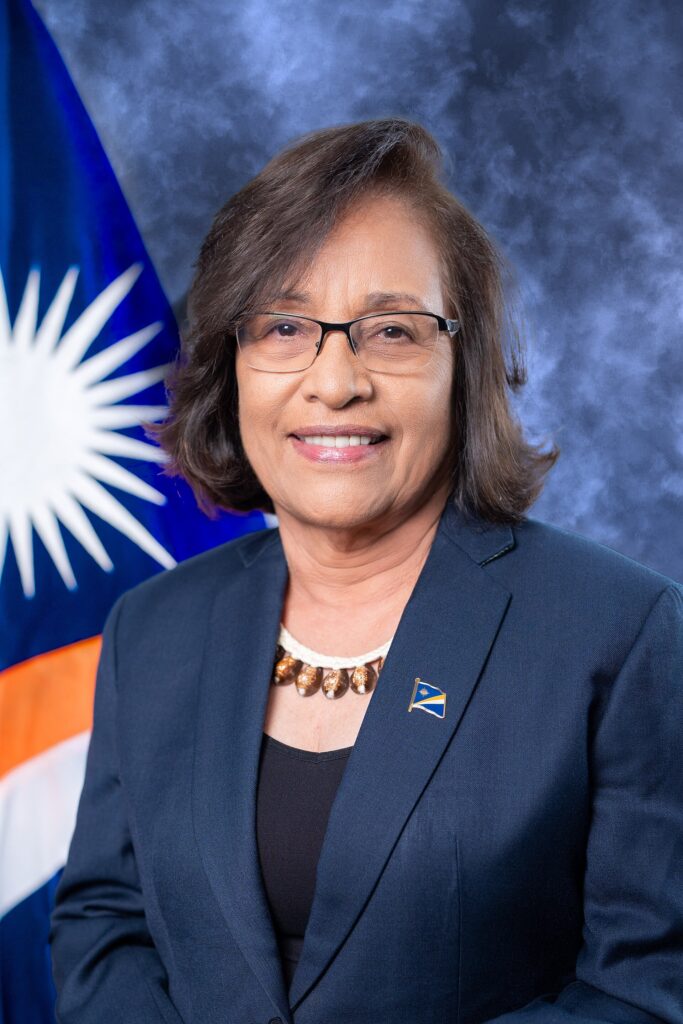
Let me make these congratulations more personal. I extend my warm congratulations to H.E. Dr. Hilda C. Heine, President of the Republic of the Marshall Islands and both Head of State and Head of Government, and to the Hon. Brenson S. Wase, Speaker of the Nitijela, the Parliament of the Marshall Islands. Through them, I congratulate all those who carry political and public responsibility for a nation that has succeeded in combining its distinctive Marshallese identity and traditions with constitutional government, democracy, human rights and the rule of law.
I was equally impressed by the deeply Christian character of Marshallese society. Christianity has become an integral part of the country’s history and identity, while constitutional religious freedom protects those who belong to other faiths or to none. Almost all indigenous Marshallese are Christians. Churches are not merely places of worship; they are important institutions of community life, education and social responsibility. Christian prayer remains a natural part of many public occasions.
There is much to honour in the Marshall Islands today: a proud indigenous culture, a functioning democracy, extensive civil and political freedoms, a strong Christian heritage and a people who have preserved their identity through colonial rule, war, nuclear testing and the challenges of independence.
At the same time, looking back over centuries of encounter with the wider world inevitably raises the question of the centuries ahead.
Few countries make the threat of rising sea levels as tangible as the Marshall Islands. The islands rise on average only about two metres above sea level. The World Bank regards the country as among those most vulnerable to climate change and sea-level rise; a rise of one metre could inundate an estimated 80 percent of the land in Majuro.
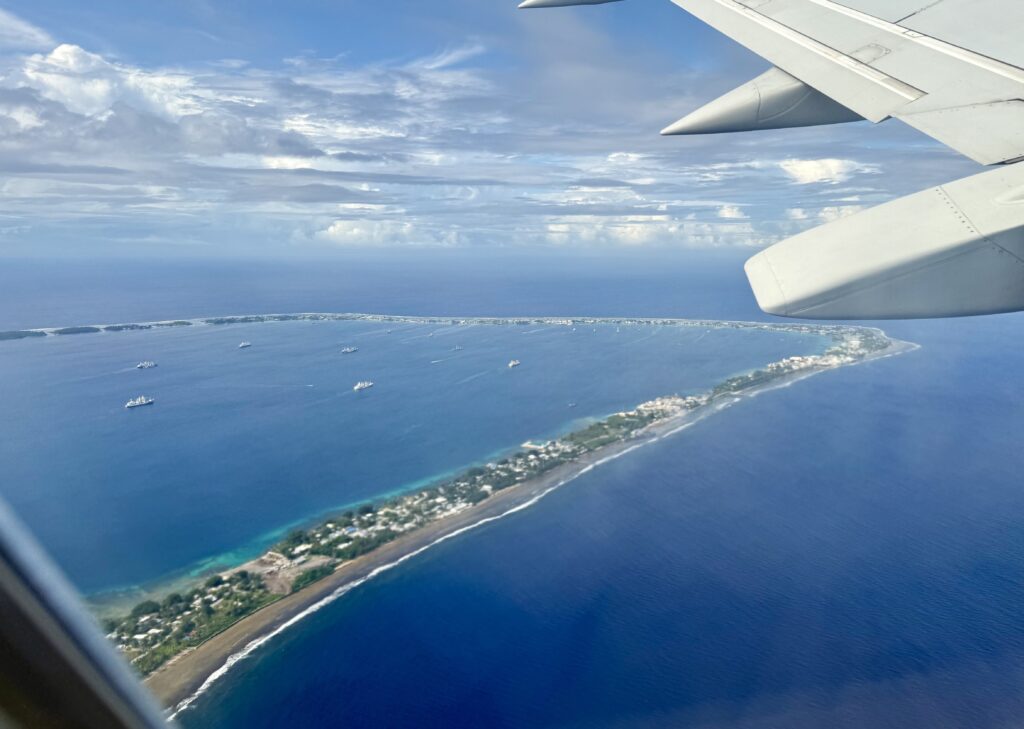
Standing on these narrow atolls, the issue ceases to be an abstract discussion about climate policy. You can literally see the ocean on both sides. For the Marshallese people, rising seas threaten homes, churches, graves, cultural heritage and ultimately the physical territory of their nation.
Five hundred years after Europeans first recorded these islands on their maps, the world has a responsibility to ensure that they do not disappear from those maps.
In this 40th year of independence, I congratulate the people, government and churches of the Republic of the Marshall Islands on four decades of sovereign statehood and on the democratic, free and deeply rooted society they have built. At the same time, I hope that future generations will still be able to live, worship and govern themselves on the islands their ancestors have called home for some two thousand years.
Downloads and Links
- Photo 1: Flag of the Marshall Islands © BQ/Schirrmacher
- Photo 2: Location of the Marshall Islands © BQ/Schirrmacher
- Photo 3: Hilda Cathy Heine, President of the Marshall Islands © Chewy C. Lin (Office of the President and Cabinet of the Marshall Islands)
- Photo 4: The main island of the Marshall Islands seen from the air © BQ/Schirrmacher
- Photo 5: Welcome to the Marshall Islands © BQ/Schirrmacher
- Photo gallery: https://thomasschirrmacher.net/?p=25932
- The original article by Christian Daily International: https://christiandaily.com/news/celebrating-the-steadfast-faith-of-a-people-in-a-disappearing-land
