(Bonn, 13.04.2026) On March 17, 2026, the longest serving patriarch in the history of the Georgian Orthodox Church, Patriarch Ilia II of Georgia, died. The following words are a farewell to the Georgian Orthodox Patriarch by Archbishop Thomas Paul Schirrmacher.
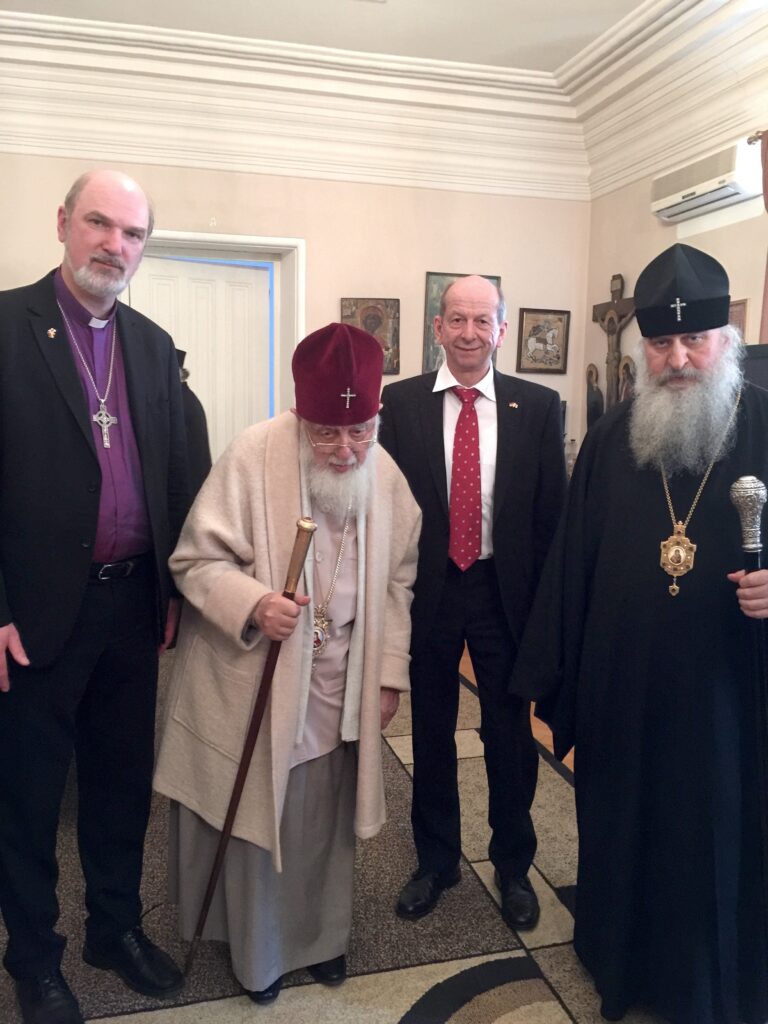
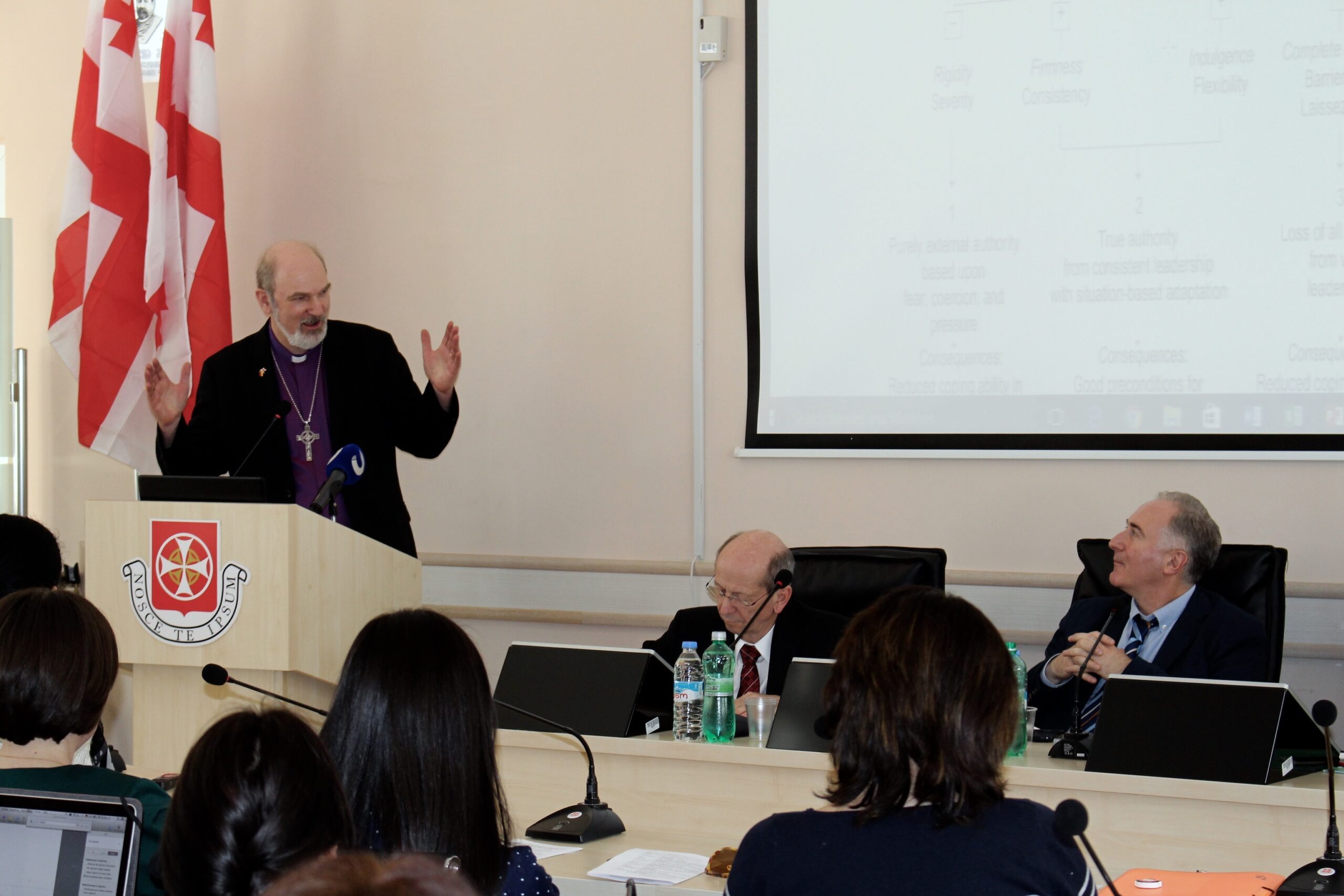
Once again, in Patriarch Ilia II of Georgia I have lost a church leader who was a role model to me and who impressed me with his wise counsel, especially whenever I asked him about Abkhazia, the moral future of Georgia and Russia and the tensions between the heads of the Orthodox Church. I am grateful that he gave me the opportunity to give a guest lecture at the Orthodox University in Tbilisi, which is a rare thing for a Protestant. Highly critical of the liberalism in many Protestant churches, nevertheless accepted me as a partner in prayer because of my conservative views. I will never forget the time I met him and the then Prime Minister in 2016. He managed to bring a moral voice to politics without encroaching on the Church’s remit. Later the same you I had the privilege to help a bit with the Pope’s visit to Georgia and received a report from Pope Francis the next day in Baku, Azerbaijan, where we had organised an ecumenical event and a mass in Baku’s only Catholic church building. It was interesting to discuss the situation of the Catholic as a minority in an Orthodox country like Georgia and a Muslim country like Azerbaijan.
Ilia II, Catholicos‑Patriarch of All Georgia, with 48 years one of the longest‑serving top church leaders in history, has departed this life after decades of quiet yet profound influence on both the Georgian Church and the nation’s politics. Born in a Georgia still under Soviet rule, he returned to his homeland in 1963 and began his pastoral ministry first as bishop in Batumi, before being transferred to Abkhazia four years later. In those regions—Abkhazia and later South Ossetia—one could already see the tensions that would shape the country’s future, as two territories remained outside the control of Tbilisi even during the Soviet era.
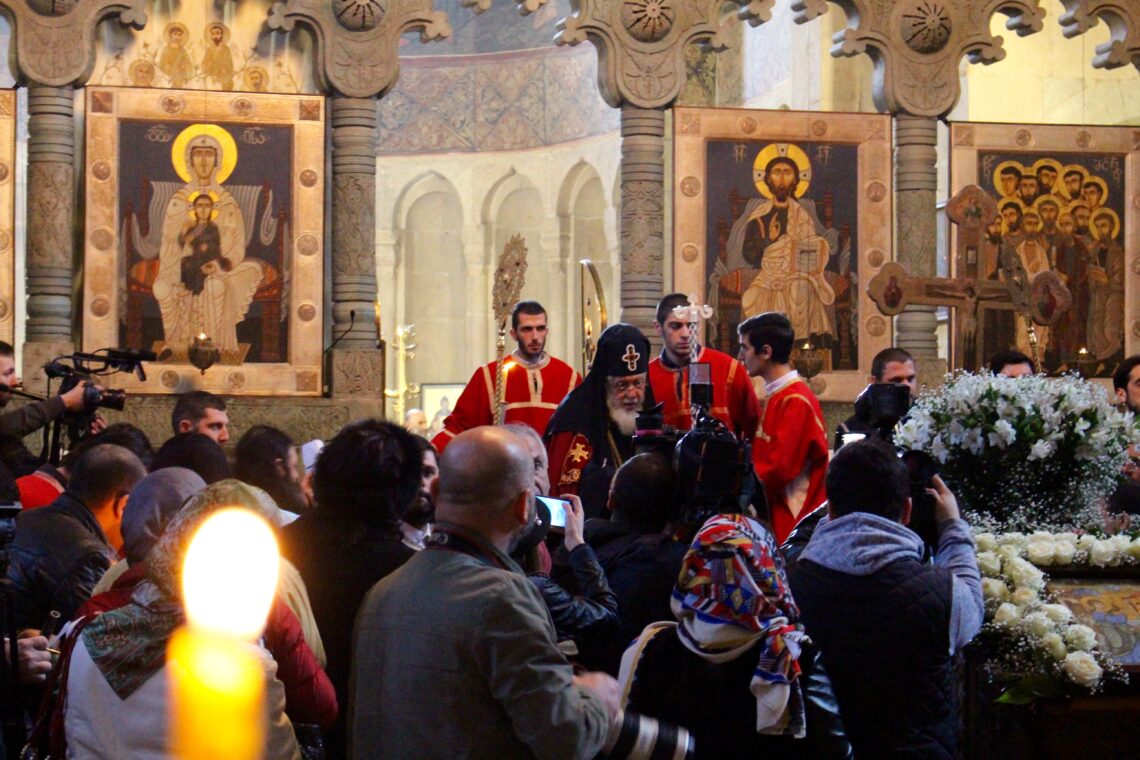
On 23 December 1977 he was elected Catholicos‑Patriarch of the Georgian Orthodox Church and took the name Ilia II upon his enthronement. The ceremony took place two days later in Mtskheta, one of Georgia’s most sacred sites, where streets were cordoned off by police forces. Yet faithful believers found their way to Svetitskhoveli Cathedral, overcoming barriers just to witness the moment their new patriarch was set apart for service. From the beginning, Ilia II stood at the intersection of faith and public life, neither retreating from politics nor becoming its servant. In 2016 I had the privilege to attend a mass celebrated by the Patriarch in this very place.
In 1989, as thousands gathered on Tbilisi’s Rustaveli Avenue to demand independence from the Soviet Union, Ilia II sought to mediate and protect the people. Russian troops responded with brutal force, using toxic gas and overwhelming violence; 21 people were killed and over 2,000 wounded. The Patriarch did what he could, but the tragedy could not be stopped. That day marked him deeply, reinforcing his conviction that peace and dialogue must always be the first instruments of leadership.
After the Soviet Union collapsed in 1991, the Georgian Church’s influence grew and the state increasingly sought its blessing. Former Soviet Foreign Minister Eduard Shevardnadze, who became Georgia’s second president, was baptised in 1992 with Ilia II as his godfather—an act that symbolised the close bond between church and nation at a fragile moment of transition. Throughout the 1990s and 2000s, Ilia II continued to act as a stabilising presence, often urging restraint and reconciliation when political passions ran high.
In 2008, Georgia faced war again when a brief but devastating conflict erupted between Russian and Georgian forces over South Ossetia. Within days, Russian troops had secured control of the region, Moscow recognised its independence, and the human cost was heavy—around 850 dead and more than 190,000 displaced. Amid the chaos Ilia II was not only a spiritual voice for peace; he also joined practical efforts, helping to evacuate the wounded and assisting in the recovery of those who had lost their lives. His presence in the midst of suffering reminded the people that their faith was not distant from reality, but deeply rooted in compassion.
Even though diplomatic relations between Russia and Georgia were broken off after the war, Ilia II ensured that the Georgian Orthodox Church maintained its ties with the Russian Orthodox Church. He had known Patriarch Kirill I since Soviet times, and their relationship reflected a belief that religious bonds should not be severed by geopolitical conflict. This stance sometimes drew criticism, yet it also underscored his consistent desire to keep lines of communication open, even when politics seemed closed.
When Russia launched its full‑scale invasion of Ukraine, Ilia II spoke out clearly, expressing solidarity with the Ukrainian people. Drawing on Georgia’s own painful experience, he emphasised the importance of territorial integrity and warned against the erosion of national sovereignty. He followed the war in Ukraine with deep sorrow, insisting that bloodshed honoured neither side and that a peaceful solution, however difficult, must remain the goal.
In his final years, weakened by illness and increasingly absent from public life, Ilia II continued to call for peace and to pray for those caught in war. His personal prayers, it is clear, were not answered in the way he had hoped; the world did not grow quieter in his lifetime. Yet his legacy is not measured by immediate results, but by the tone he set: a voice of moderation, a steady hand between competing powers and a ceaseless plea for mercy in a time of hardened hearts Ilia II leaves behind a Georgian Church that he helped to restore and a nation that repeatedly looked to him as a moral anchor. As a spiritual father, a national figure and a quiet moderator in politics, he showed that true leadership sometimes means stepping in when others shout, listening when others preach and praying when others prepare for war.
My deepest prayer is that when the bishops gather to elect a new Catholicos‑Patriarch, they will choose once again a spiritual leader who can influence politics as a moral anchor—firm in conscience yet respectful of the separation between church and state. May this future patriarch stand in the midst of the tensions within the Orthodox world as a non‑partisan pillar of truth, ready to speak with courage, to listen with humility and to serve not his own authority, but the unity and peace of the Church and the people.
Downloads and Links
- Photo 1 (from left): Thomas Schirrmacher, Patriarch Ilja II, Hans-Joachim Hahn, Metropolit Daniel © BQ
- Photo 2: Guest lecture by Thomas Schirrmacher at the Saint Andrews Georgian University in Tiflis © BQ
- Photo 3: Thomas Schirrmacher at the Saint Andrews Georgian University in Tiflis © BQ
- Photo 4: Beloved Patriarch Ilia II at Svetitskhoveli Cathedral in 2016 © BQ/Schirrmacher
- BQ 427 – 32/2016 “Georgia: The Leaders of all Areas of Society in three Days”: https://bonn-profiles.net/?p=11554
- Press release by the Orthodox Times “Final farewell to Patriarch Ilia II of Georgia”: https://orthodoxtimes.com/final-farewell-to-patriarch-ilia-ii-of-georgia-video-upd/

