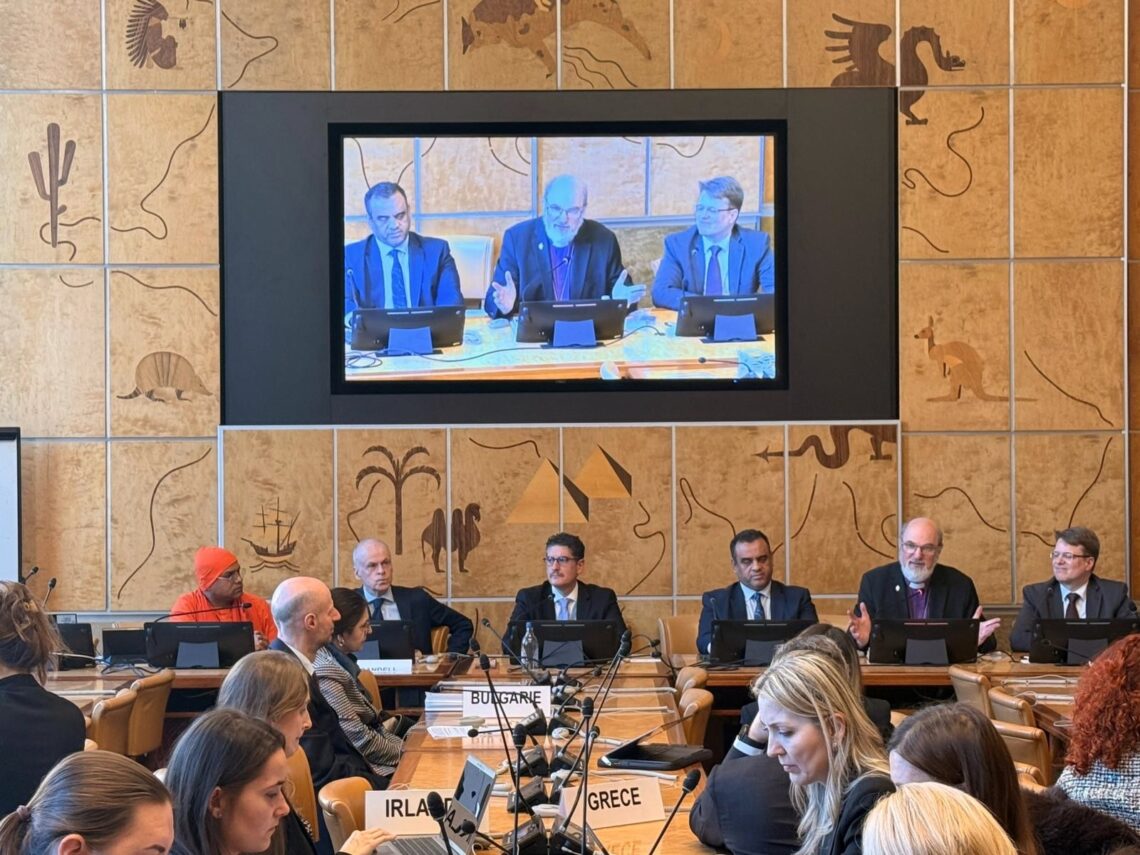
(Bonn, 02.03.2026) Schirrmacher spoke at the multi-religious symposium “The role of Faith communities in addressing religious intolerance”, hosted by the World Jewish Congress’s side event of the High-level Week of the 61st session of the UN Human Rights Council in Geneva.
In his speech, Archbishop Thomas Schirrmacher, President of the International Council of the International Society for Human Rights (ISHR), explained that the moral fabric and bases of society stems from religion and worldviews, not politics. This is why it is crucial that religious leaders call for coexistence and respect for human dignity, rather than violence and use their moral authority to teach their people from youth onwards, that human dignity comes from God and may not be questioned. Faith leaders must tackle extremism within their own communities. Elected political leaders cannot do this; only religious leaders can. They should be more courageous, as they do not need to stand for re-election or risk financial loss. Schirrmacher also thanked Michael Wiener, the concluding speaker from the Office of the UN High Commissioner for Human Rights (UNHCHR), for moderating the Faith for Rights community of the UNHCHR. For Schirrmacher, this is a prime example of how leaders from diverse religions and worldviews can work closely together without compromising their specific beliefs.
Swami Vedanishthananda from the Vedantic centre in Geneve received applauds when he suggested that we go from co-existence to co-flourishing, pointing out that we should not only tolerate each other’s existence but rather celebrate this diversity of thoughts and convictions. “We have to take the interfaith dialogue out of the conference rooms and into the streets by serving our communities together,” he said.
Islam was represented by Mohammed Levrak, who is both the Imam of the mosque in Geneva and a member of the Geneva Interreligious Platform. He called on religious leaders of the Abrahamic faiths to speak out more and not leave the public sphere to politicians and civil society actors in their countries and religions.
ECI Director Tomas Sandell agreed with the Archbishop, stating: “As faith leaders we need to be more self-critical of our own religious traditions instead of pointing fingers against others.” As an example he used an inner-Christian tension: “Also today we need to remain vigilant as Russia continues its full-scale aggression against Ukraine, in a war which Patriarch Kirill of the Russian Orthodox Church has called a Holy War against Ukraine and the West. Who would have thought that the bloodiest war on European soil after the Second World War would be a Holy War between one Christian nation against another? This, if anything, calls for critical introspection for those of us who call ourselves Christians,” Tomas Sandell said.
The symposium was moderated by Leon Saltiel of the World Jewish Congress and included additional interventions from Chief Rabbi Pinchas Goldschmidt of the Conference of European Rabbis (by video), Ambassador David Fernandez Puyana, the Permanent Representative of the University of Peace to the UN in Geneva.
Downloads and Links
- Photo 1: Archbishop Schirrmacher speaking © ISHR/Matthias Böhning
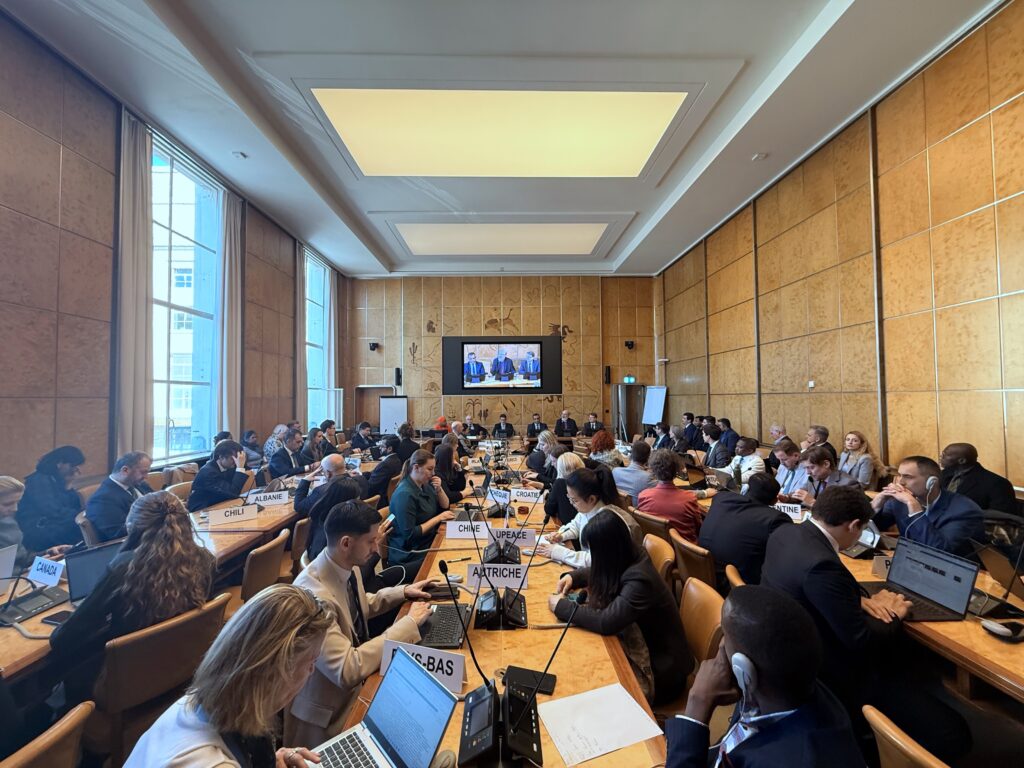
- Photo 2: Archbishop Schirrmacher speaking – the plenum © ISHR/Matthias Böhning
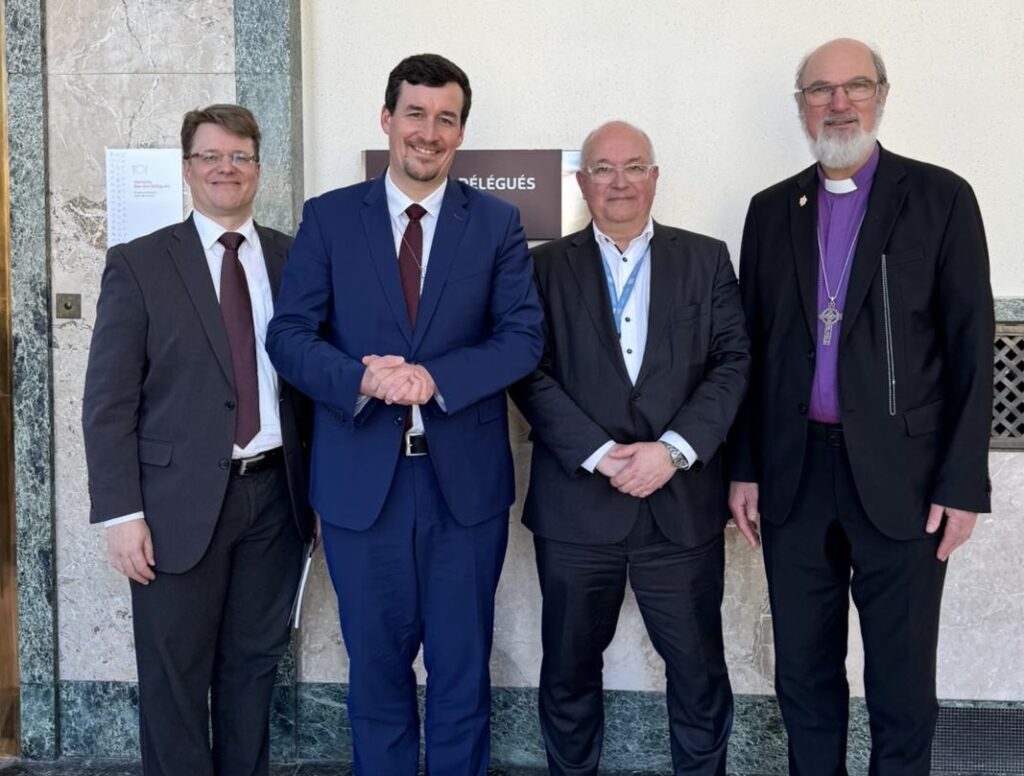
- Photo 3 (from left): Michael Wiener, Office of the UNHCHR, Matthias Boehning, Michael O’Flaherty, Human Rights Commissioner of the European Council © ISHR/Matthias Böhning
- Photo 4: Archbishop Schirrmacher speaking © ISHR/Matthias Böhning
- Photo 5: Archbishop Schirrmacher speaking – the plenum © ISHR/Matthias Böhning

