Schirrmacher publishes slides from his Tilman Geske Memorial Lectures
This english translation of the original BQ was added/updated on 25 June 2026.
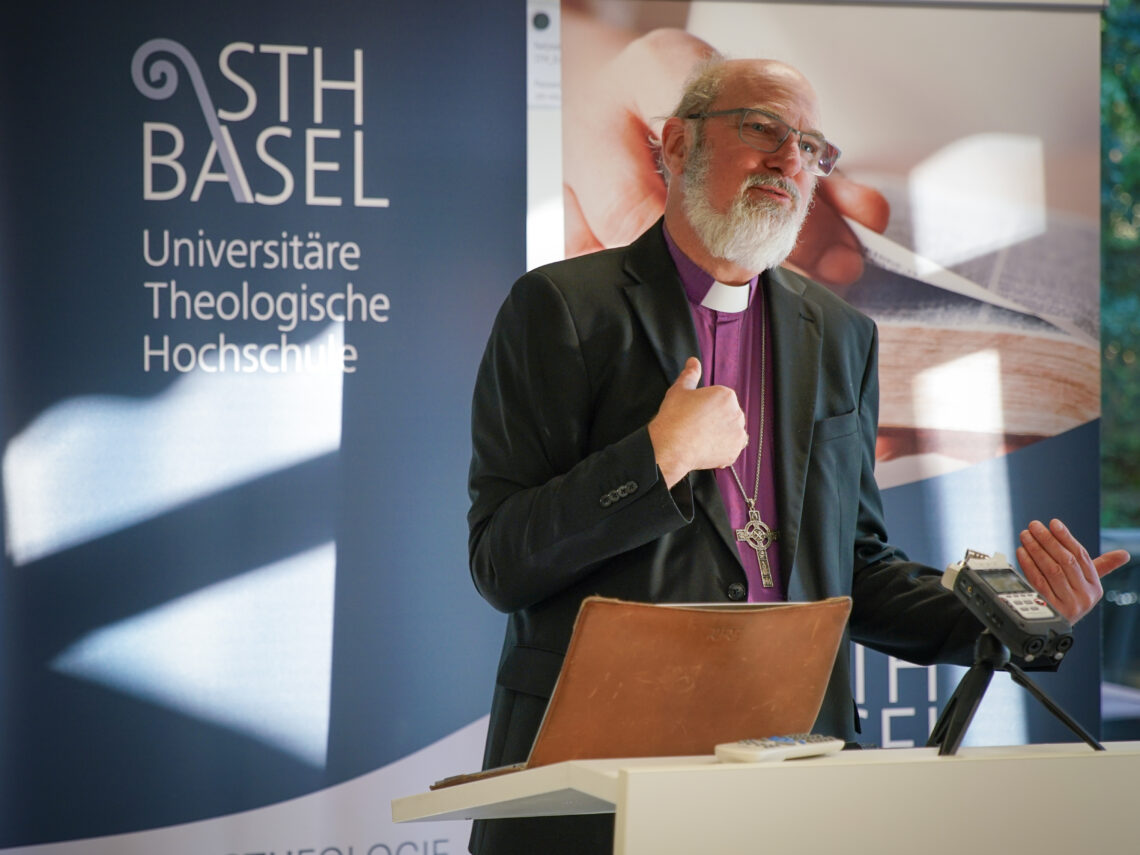
On April 10, 2025, Thomas Schirrmacher delivered the Tilman Geske Memorial Lectures at the State-Independent Theological University of Basel under the title “Jesus as a Martyr” – A Comparison Between the Christian and Islamic Concepts of Martyrdom.” Due to the lively discussion, he has revised the two slides “The Extreme Contrast Between ‘Martyrs’ in Christianity and Islam” and “Stages in the Development of the Theology and Practice of Suicide Attacks Over the Last 45 Years” over the past few months and is now making them available.
Slide: Stages in the development of the Islamist theology and practice of suicidal attacks over the last 45 years
Under each entry in the chronology, the text in italics indicates where the respective concept was first applied or gained prominence.
Part 1: Developments from 1960 to 1980, before the first religiously motivated suicide attacks, provide the background for later developments
1960 onwards: Men are allowed to take it upon themselves to wage jihad against infidels and do not have to wait for a call from the caliph or other authorities, as was the case in previous centuries.
Teachings of Islamist movements in the late 20th century.
1972 onwards: Yassir Arafat and the Palestinians use suicide bombers without any religious justification.
First in 1972 at Lod Airport in Israel (it was not until about a decade later that Hezbollah adopted the approach with religious justification).
1973 onwards: The previously largely nationally oriented warlike jihad becomes a transnational jihad against all infidels.
Argued for in the writings of the Muslim Brotherhood, finalized since the Arab-Israeli wars of 1967 and 1973.
1980–1988: Minors are sent to jihad.
Iraq-Iran War 1980–1988: Children as soldiers on Khomeini’s orders.
Part 2: The nine stages of the radicalisation of religiously motivated suicidal attacks and their theological legitimisation
1980 onwards: Adult men are allowed to commit suicide if they take infidels with them to their deaths.
1980 in Syria against the government / the 1980s onwards Hezbollah / 1983 in Beirut / the 1990s onwards Hamas and others / 2000 onwards Chechnya.
1981 onwards: Suicide attacks may be directed against governments of Islamic states that are considered infidel.
1981 assassination of Egyptian President Anwar al-Sadat / 1993 onwards Hamas against the Palestinian Authority / 2002 onwards Indonesia.
1984 onwards: Suicide attacks are, in a sense, ‘canonized’ as part of the fight against infidels.
1984 onwards in Palestine (Hamas) / 1990s onwards Hezbollah / 2000 onwards, Chechen war.
1990 onwards: The surviving dependents of suicide bombers are to be honored and financially supported.
Most intensively practiced by the Shiite Hezbollah since the 1990s.
2000 onwards: Underage male youths and children are allowed to be suicide bombers, usually from the age of 12.
2000 onwards Intifada in Israel / 2010 onwards ISIS.
2001 onwards: It is permissible to be a suicide bomber even if (many) Muslims die as collateral damage.
First in Palestine, then on September 11, 2001 / 2003 onwards in Iraq.
2003 onwards: It is permissible to be a suicide bomber even if only Muslims (or almost only Muslims) die in the process.
From 2003 onwards in Iraq.
2002: Women, who previously appeared only as proud mothers of male suicide bombers, are allowed to be suicide bombers.
2002 for the first time in Palestine.
2011: Underage girls are allowed to be suicide bombers.
2011 onwards in Iraq / 2014 onwards: on a large scale in Nigeria (Boko Haram).
Slide: The extreme contrast between “martyrs” in Christianity and Islam
| Christian martyrs | Islamic martyrs |
| The martyr suffers martyrdom passively. | The martyr is carrying out the martyrdom actively. |
| For the martyr, martyrdom is involuntary and unwanted. | For the martyr, martyrdom is voluntary and actively sought after. |
| The martyr is the victim and object of the actions of others. | The martyr is perpetrator and subject, and makes others the victims, and only as a consequence might become victim and object. |
| The martyr does not seek martyrdom. | The martyr seeks martyrdom. |
| The martyr acts defensively. | The martyr acts offensively. |
| The martyr does not use violence but suffers it; he renounces violent self-defense. | The martyr commits violence or plans violenceand may become a victim of counter-violence. |
| The martyr is murdered. | The martyr murders or plans to murder and might die in the process or in reaction might be killed. |
| The martyr is a voice for life and peace. | The martyr is a voice for death, violence, and discord. |
| The martyr is a voice against the view that violence can solve problems. |
Martyrs are a voice for the view that violence can solve problems. (The perpetrators of the attacks of September 11, 2001, put it in classic terms: “You love life, we love death.”) |
|
No one else is harmed by the martyr. Sometimes this saves the lives of others. |
Martyrdom is considered as such only if others are harmed as a result, or at least if that was the goal. |
| It is morally reprehensible to seek martyrdom. | It is morally imperative to seek martyrdom. |
| The martyr has no political motives or goals, even if his murderers may have political motives and the martyrdom may have enormous political consequences. | The martyr has highly political motives and goalsand hopes for far-reaching political consequences. |
| Martyrdom is usually associated with theview that the state and religious communities are separate institutions. | Martyrdom is linked to the idea that political and religious issues cannot be separated from one another. |
In three parts on Thomas Schirrmacher’s blog:
- Troops killed as martyrs for God? Something startling in Edinburgh
- Similar to Edinburgh and Tokyo: Soldiers worshipped as martyrs in Ottawa
- The Japanese Yasukuni Cult – Soldiers as Martyrs?
Downloads and Links
- Photo 1 and photo 2: Thomas Schirrmacher during his guest lecture © STH Basel
- Download the slide presentation ‘Stages in the development of the Islamist theology and practice of suicidal attacks over the last 45 years’ (PDF)
- Download the slide presentation ‘The extreme contrast between “martyrs” in Christianity and Islam’ (PDF)
- Event announcement and photo gallery from STH Basel, as well as an audio recording of the lecture: https://sthbasel.ch/?p=17828

