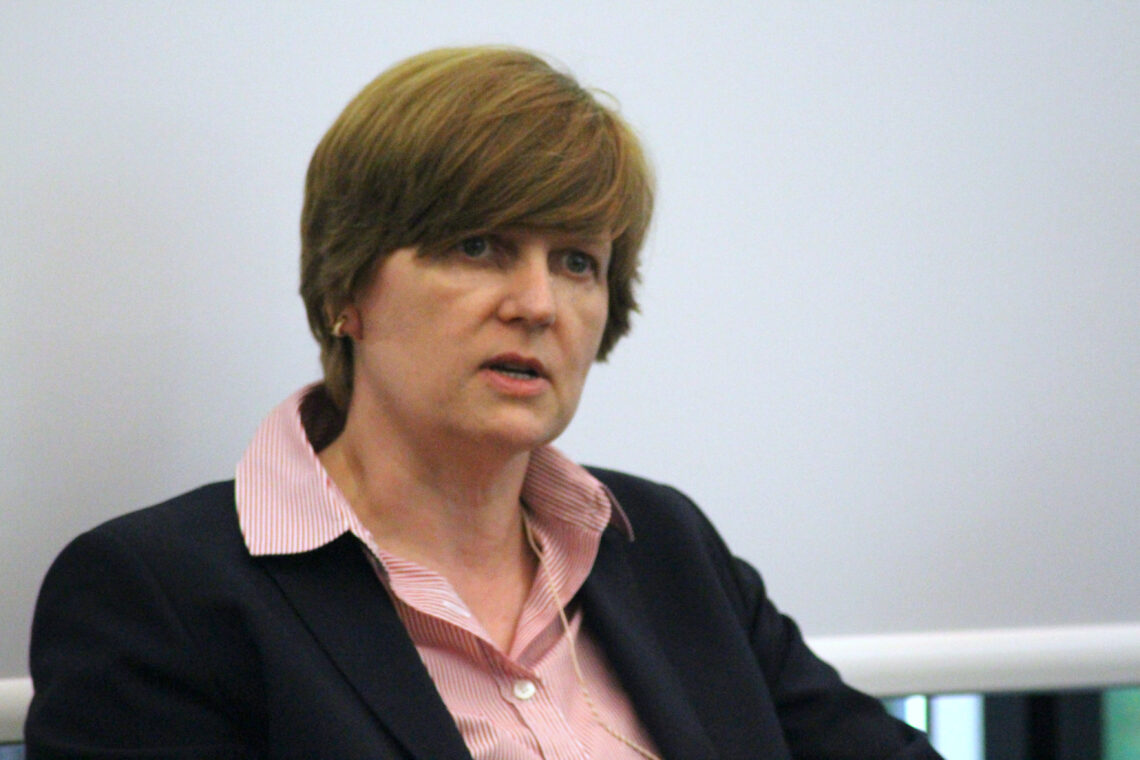
Prof. Christine Schirrmacher spoke as an expert witness in the state parliament of Saxony-Anhalt
(Bonn, 21.11.2025) On November 17, 2025, the 21st Parliamentary Investigation Committee of the State Parliament of Saxony-Anhalt met to investigate the attack on the Christmas market in Magdeburg on December 20, 2024. A man had killed six people and injured many others with a car. The committee, which consists of 13 members from all political parties and will meet at least every two weeks, plans to present a final report by summer 2026. It interviews witnesses such as victims, police officers, government officials, and experts such as Prof. Dr. Christine Schirrmacher from the Department of Islamic Studies and Middle Eastern Languages at the University of Bonn. Prior to the hearing, Schirrmacher had prepared a non-public expert opinion, which was made available to the committee members.
What distinguishes Shiites and Sunnis
The background to this agenda item was the fact that the attacker, Taleb A., was considered to be of the Shiite faith before he renounced Islam. Schirrmacher explained that the two branches disagree on who is entitled to lead the Islamic world. Shiites believe that only a relative or descendant of Muhammad is entitled to do so. Sunnis, on the other hand, believe that this person should be determined by election. Today, Sunnis make up the majority of Muslim believers, at just under 85 percent, according to Schirrmacher. Shiites are therefore in the minority.
Shiites persecuted in Saudi Arabia
The conflicts between the two movements are considerable, according to Schirrmacher. Although they are based on theology, they are now expressed in terms of power politics. Saudi Arabia, for example, the home country of Taleb A., is Sunni-led. In the past, Shiites have demanded more equal treatment. Schirrmacher’s remarks suggest that the situation for Shiites in Saudi Arabia has worsened since around 2011. Amnesty International writes: “Since 2011, the authorities have been persecuting the Shiite minority living in the country in the most brutal manner.”
Women in Saudi Arabia do not have legal capacity
Another topic that Schirrmacher reported on when asked was the situation of women in Saudi Arabia. The principle of male guardianship applies to them. A Saudi woman can never fully represent herself in legal matters. Male “guardians” such as fathers or husbands must give their consent for various legal acts. This also applies to marriage.
Although the current Saudi ruler Mohammed bin Salman has somewhat restricted these regulations, they still apply, according to Schirrmacher. The royal family still sets the pace for reforms. Several women’s rights activists have been imprisoned in the country. This social structure also means that divorce is very difficult for women in Saudi Arabia. Sometimes there is family pressure to stay in a marriage. According to media reports, Taleb A. stated that he had been married to a 16-year-old girl for two months in 1995.
Public atheism punishable in Saudi Arabia
Regarding the situation of women in Saudi Arabia, Schirrmacher went on to explain that domestic violence is at least tolerated by society—and unlike in many other Islamic countries, Saudi Arabia’s criminal law is based on Sharia law.. Accordingly, executions are still carried out in the country – in large numbers, according to Schirrmacher. Publicly practised atheism is also punishable by law and is considered a form of terrorism. Critical statements are sanctioned and human rights activists such as Raif Badawi are imprisoned. In the years leading up to the attack he carried out, Taleb A. also expressed vehement criticism of Islam and Saudi Arabia. In 2016, he was granted political asylum in Germany.
Downloads and Links:
- Photo 1: Prof. Dr. Christine Schirrmacher © Martin Warnecke
- Photo 2: Facade of the Saxony-Anhalt State Parliament on Domplatz in Magdeburg © Axel Tschentscher CC BY-SA 4.0
- Website of Christine Schirrmacher: https://christineschirrmacher.info
- Website of Christine Schirrmacher at the University of Bonn: https://www.ioa.uni-bonn.de/isl/de/pers/schirrmacher
- Press release from the State Parliament of Saxony-Anhalt: https://landtag.sachsen-anhalt.de/islamwissenschaftlerin-im-pua
- 21st Parliamentary Investigation Committee of the State Parliament of Saxony-Anhalt: https://landtag.sachsen-anhalt.de/landtag/ausschuesse-gremien/ausschuesse-detailseite/ausschuss/21-parlamentarischer-untersuchungsausschuss

